The older I get, the more I find myself asking a question that seems strangely absent from many of today’s political and social discussions: What exactly is the end game? Not the slogan. Not the talking point. Not the carefully crafted mission statement on a website. The actual end game. What do these groups ultimately hope to accomplish? What does victory look like? More importantly, what does society look like if they succeed?
The reason I ask is because I have learned that actions often reveal far more than words. If I want to know what an individual truly values, I pay attention to how they spend their time, their money, and their energy. The same principle applies to organizations, movements, and activist groups. I am far less interested in what they say their goals are than I am in what their behavior suggests those goals might be.
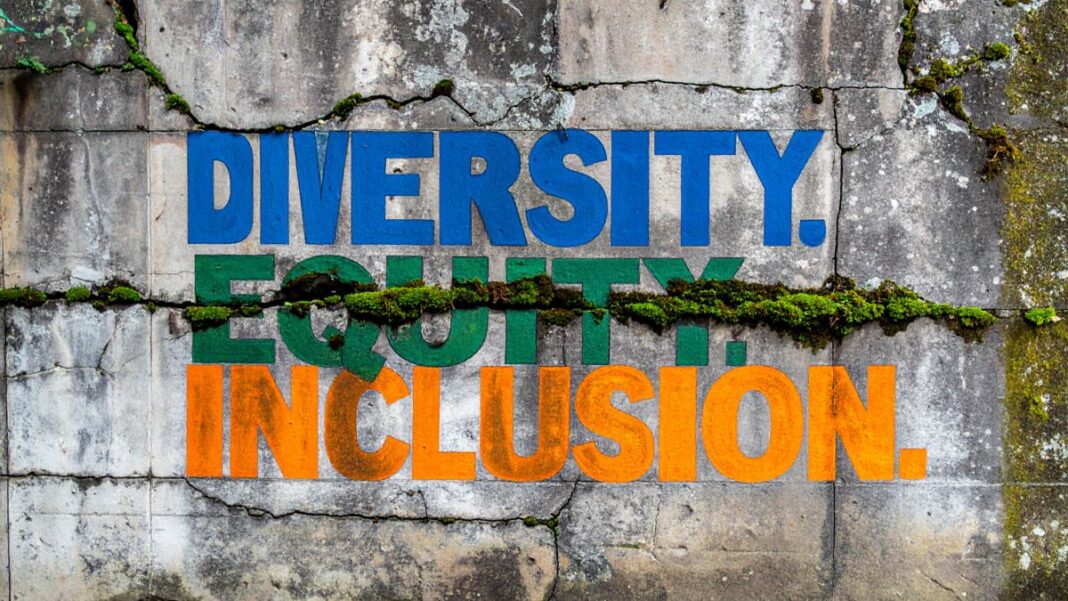
Take many of today’s activist movements. On the surface, the language is often appealing. Equality. Inclusion. Diversity. Acceptance. Respect. Unity. Few reasonable people would oppose those concepts. The problem is that when you look beyond the slogans and begin observing the behavior, the message often becomes far less clear. It is difficult to take calls for unity seriously when so much energy is devoted to identifying new groups of people to dislike, condemn, exclude, or blame.
One of the most common phrases I hear from various groups is some version of, “We love everyone.” Unfortunately, that sentence often comes with an unspoken second half. We love everyone… except these people. We support diversity… except diversity of thought. We oppose prejudice… except when it is directed at those we disagree with. We believe in inclusion… except for those who hold different opinions. It is those exceptions that concern me. In fact, I would argue that those exceptions are doing more damage to society than the original disagreements themselves.
Take the LGBT movement as one example. Most Americans have little interest in telling consenting adults how to live their lives. The idea that people should be treated with basic dignity and respect is not controversial. Yet when I observe many of the public discussions, online debates, conferences, and activist events associated with the movement, it often appears that the conversation has moved well beyond simple acceptance. I recently watched portions of a convention where speaker after speaker raised grievances about pronouns, terminology, and perceived slights committed by people who were supposedly on the same side. Rather than discussing larger issues, the overwhelming focus seemed to be on increasingly narrow disagreements among allies.
That observation led me back to the same question. What is the end game? If people who largely agree with one another cannot maintain unity, what happens when they attempt to bring the rest of society along? If every disagreement creates a new category, a new identity, or a new grievance, where does that process ultimately lead? Based on what I see, it often appears that the movement is no longer simply asking to be accepted, but increasingly demanding that society itself adopt entirely new definitions of concepts that were once broadly understood. Whether that perception is accurate or not, it is a perception that many people share, and it deserves honest discussion rather than immediate dismissal.
The same question applies to racial activism. Based on videos, social media posts, interviews, and public statements I have seen, it appears there is a growing number of activists and commentators who view entire groups of people through the lens of collective guilt. More troubling, there are individuals who openly advocate hatred, violence, and in some cases even death based solely on race. As someone who happens to be white, I find that deeply concerning. Not because I believe these individuals represent everyone, but because the rhetoric exists at all. I did not choose my race any more than anyone else chose theirs. The idea that a person could be hated, attacked, or even killed because of a characteristic they had absolutely no control over should disturb every decent person regardless of race.
What I find especially confusing is the inconsistency. We are told that race should not matter, yet race appears to matter more than ever. We are told that stereotyping is wrong, unless the stereotype is directed at an approved target. We are told that prejudice is unacceptable, unless the prejudice happens to align with a fashionable political narrative. The message increasingly seems to be that equality is important, but only for some people. We don’t see race… unless you’re white. We shouldn’t judge people by immutable characteristics… unless those characteristics happen to belong to the wrong group. Those contradictions are difficult to ignore.
The irony is that many of these groups believe they are moving society toward a better future. I do not doubt that many participants are sincere. What I question is whether they have fully considered the consequences of the road they are traveling. Every movement appears convinced that it is pulling society in the correct direction. The problem is that dozens of other movements believe exactly the same thing. Each group is pulling on the same rope, each convinced that victory is just around the corner, while failing to recognize that everyone else is pulling in a different direction.
The same inconsistency appears when religion enters the conversation. We are constantly told that people should be free to practice their beliefs. We are told that diversity should be celebrated and that society benefits when people of different backgrounds, cultures, and faiths can coexist peacefully. On the surface, that sounds reasonable.
Yet it often seems that this principle comes with conditions attached.
When people speak openly about respecting religious beliefs, there frequently appears to be an unspoken exception. The exception is Christianity.
Whether it is a television program, a social media debate, a college campus, or a political discussion, it often feels as though Christianity has become the one faith that can be openly mocked, ridiculed, or dismissed without consequence. The same people who demand sensitivity toward one group’s beliefs can become remarkably intolerant when confronted with Christian beliefs they happen to disagree with.
Again, I find myself returning to the same question.
What is the end game?
If the goal is religious freedom, then religious freedom must apply to everyone. If the goal is tolerance, then tolerance cannot be reserved only for approved viewpoints. If diversity is truly a strength, then that diversity must include people whose beliefs differ from our own.
I am not suggesting that religious ideas should be immune from criticism. Every belief system should be open to examination and debate. The problem arises when one set of beliefs is treated as worthy of respect while another is treated as worthy of contempt. That is not tolerance. It is favoritism disguised as tolerance.
The pattern is becoming difficult to ignore. We support free speech, except for certain opinions. We support religious freedom, except for certain religions. We oppose prejudice, except when it is directed at approved targets. We claim to celebrate diversity while increasingly demanding conformity.
At some point, a reasonable person has to wonder whether society still believes in these principles at all, or whether we simply apply them selectively depending on who is involved.
Perhaps that is because we have spent decades conditioning people to think in terms of teams. Sports teams. Political parties. Brands. Social movements. Coke or Pepsi. Ford or Chevy. Democrat or Republican. Everywhere we look, society encourages us to choose a side. Most of these divisions are harmless by themselves, but together they create a mindset that conditions people to view life through the lens of allies and enemies. By the time we reach issues involving race, politics, religion, gender, and culture, we have already spent years practicing tribalism.
The result is a society that grows more fragmented with each passing year. We are becoming a collection of competing groups, each demanding recognition, validation, and influence, while losing sight of the simple reality that we all have to share the same country, the same communities, and ultimately the same future. Every group wants to win. Few seem interested in asking what happens if everyone else loses.
That brings me back to the question that started this article.
What is the end game?
If the goal is unity, why are so many movements becoming more divisive? If the goal is equality, why are so many people being judged by characteristics they cannot control? If the goal is acceptance, why do so many organizations maintain growing lists of people they refuse to accept? If the goal is a better society, why does it increasingly feel as though we are being encouraged to view one another as opponents rather than neighbors?
A healthy movement should be able to answer those questions. A healthy idea should be able to withstand scrutiny. A healthy society should welcome difficult conversations.
Because if the destination is a world where everyone belongs to a tribe, everyone has a grievance, everyone has an enemy, and everyone believes their side is the only side worth listening to, then no one truly wins. We all lose together.
And that is why I keep asking the same question.
What’s the end game?